
Roughly half of Australian renters (49%) are connected to mains gas, leaving 1.63 million households paying hundreds of dollars a year in fixed charges, a total $2.6 billion a year in potential energy savings.
Australian renters are missing out on more than $2.6 billion a year in potential energy savings because of a regulatory quirk that leaves tenants paying fixed gas connection fees instead of landlords, according to new analysis from Rewiring Australia.
Roughly half of Australian renters (49%) are connected to mains gas, leaving 1.63 million households paying hundreds of dollars a year in fixed charges for a network they did not choose and cannot disconnect from.
In Greater Sydney, about 383,000 rental households are connected to mains gas, with tenants collectively paying an estimated $101 million a year in fixed charges simply to keep those lines live. Around 89,000 Sydney rental households use gas exclusively for cooking - paying roughly $264 a year in mandatory connection fees while burning as little as $1 worth of actual gas over 12 months.
Rewiring Australia CEO Francis Vierboom said renters were being locked out of savings available to homeowners because the current system gives landlords no financial reason to replace aging gas appliances.
“Efficient electric appliances are cheaper to run than gas and, as more households make the switch, getting off gas altogether will become increasingly important for keeping energy bills down,” Mr Vierboom said.
“The problem for renters is that they pay the gas bill, while the landlord owns the appliances and decides whether the home stays connected. So the person feeling the pain of rising gas costs is the one person who cannot do anything about it.
“As more households leave the gas network, the cost of maintaining those ageing pipes will be spread across fewer customers. Without reform, renters risk being stranded on an increasingly expensive network while homeowners are able to move on.”
Rewiring Australia is calling for fixed gas connection charges to be treated like water supply charges, with property owners paying the fixed infrastructure cost and tenants paying only for the gas they actually use.
“If the landlord decides a property stays connected to gas, the landlord should pay the fixed cost of that decision. This is not about forcing landlords into expensive upgrades overnight, just fixing the incentive so when an old gas appliance reaches the end of its life, replacing it with an efficient electric alternative makes financial sense for the property owner,” Mr Vierboom said.
In NSW, eligible landlords can already access zero-interest loans of up to $15,000 for energy upgrades including induction cooktops, heat-pump hot water, and reverse-cycle air conditioning.
“The finance is increasingly there but what is missing is the incentive. Fixing this quirk would cut bills, speed up electrification of rental homes, and stop tenants being left carrying the cost of a gas network everyone else is gradually leaving,” Mr Vierboom said.
MEDIA: Eliot Barham | 0423 921 200
Electrifying our homes and cars is the recipe to cut emissions and save money for Australian homes. Let's build an abundant electric future for Australia.

“Instead of cutting the battery subsidy, the government should look at incentivising virtual power plant enrollment as a rebate condition. This would allow homes to discharge into the grid during peak evening demand and drive down power bills across the entire network.

The Liberals, Nationals and One Nation have promised to scrap new legislation that will require all new homes to be built all-electric from Jan 2027 and will also roll back plans that would see households required to replace failing gas hot water systems with efficient electric ones - due to come into effect next March.These proposed measures would only serve to protect the gas industry, and will keep households locked into costly gas infrastructure for decades to come.
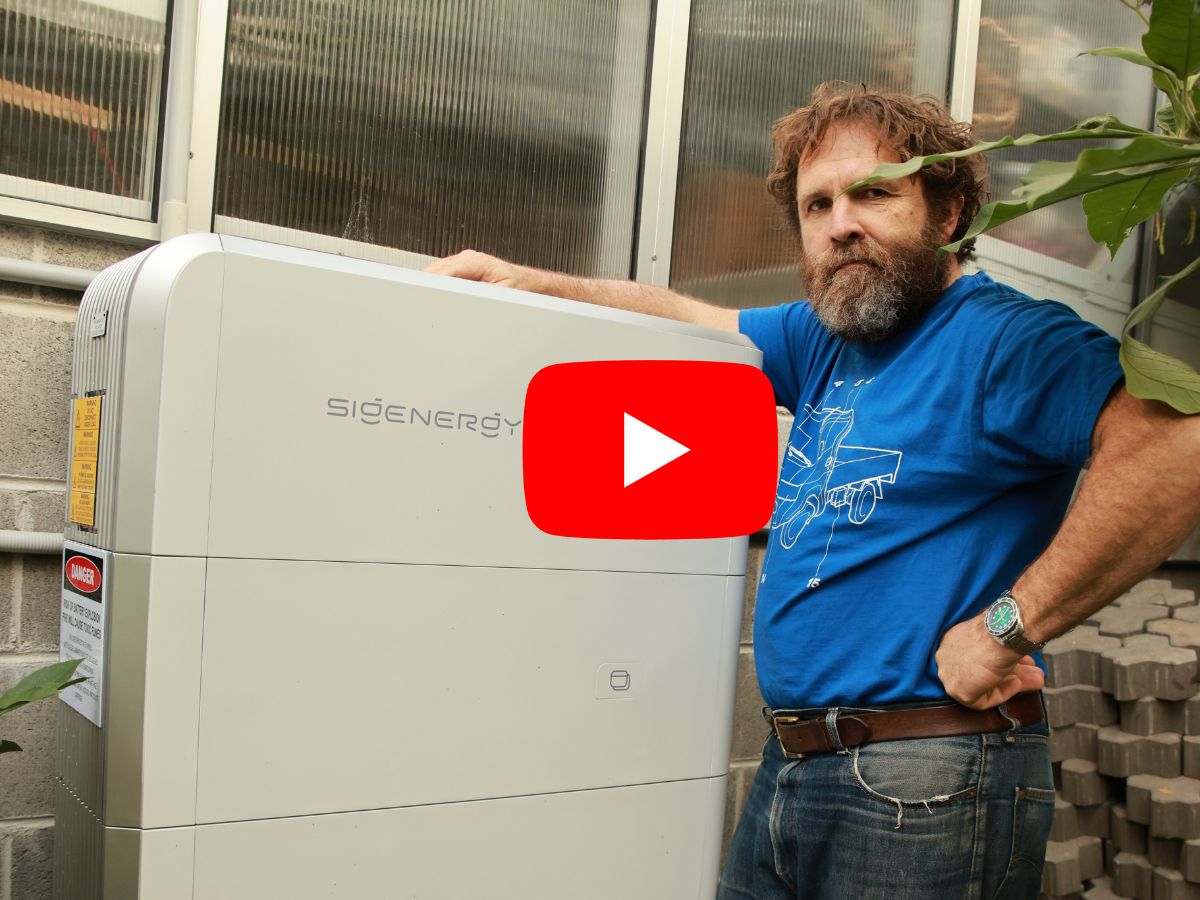
Households can save $4300 a year on their energy bills by ditching gas and petrol and going fully electric reveals Dr Saul Griffith.