
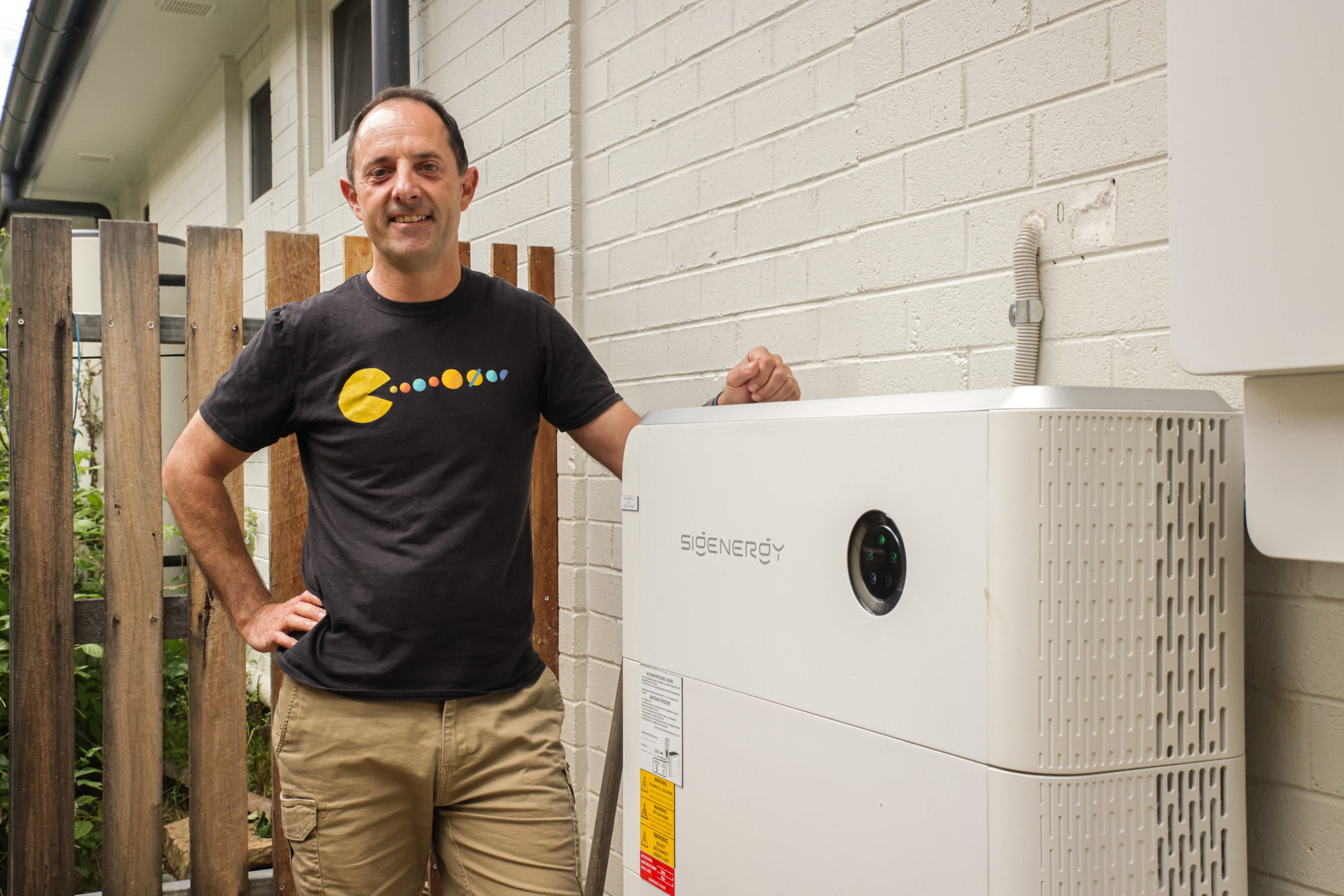
“Instead of cutting the battery subsidy, the government should look at incentivising virtual power plant enrollment as a rebate condition. This would allow homes to discharge into the grid during peak evening demand and drive down power bills across the entire network.
Cutting the Cheaper Home Batteries program directly hits middle-income families rather than wealthy inner-city residents, Rewiring Australia said today, as new analysis reveals more than 80 per cent of installations are in areas with median household incomes of between $60-120k.
“The use of home batteries has surged in the outer suburbs of our big cities and in particular, where there are growth corridors and new homes being built for people on modest incomes,” Calum Harvey-Scholes, Head of Research at Rewiring Australia, said.
Home battery uptake peaks in Sydney's outer west including The Ponds (20.8%), Marsden Park (17.9%), and Kellyville (17.2%), as well as Melbourne's outer rim in areas such as Narre Warren North (10.4%) and Lyndhurst (10.1%).
Similar analysis undertaken by the National Automotive Leasing and Salary Packaging Association (NALSPA) last month found the highest uptake of the Electric Car Discount is concentrated in the outer working suburbs of Sydney, Melbourne, and Brisbane.
Both the Cheaper Home Batteries Scheme and Electric Car Discount risk being cut by the Government ahead of its Mid Year Economic Fiscal Outlook as stubbornly high fossil fuel-led induced inflation harms families already struggling with the cost of living.
Mr Harvey-Scholes said both function as deflationary shields for consumers.
“Rapid adoption of home batteries has pushed record levels of expensive and dirty coal and gas off the system and led to a 45 per cent reduction in wholesale prices since July last year. That has happened at the same time fuel costs have surged due to war in the Middle East,” he said.
“Instead of cutting the battery subsidy, the government should look at incentivising virtual power plant enrollment as a rebate condition. This would allow homes to discharge into the grid during peak evening demand and drive down power bills across the entire network.
“Those who secured an EV through the Electric Car Discount have reduced the exposure of their household and Australia to volatile Middle Eastern oil and these new cars will also, in time, help the affordable used EV market to develop.
“Gutting either subsidy to find savings simply removes two of the best frontline tools families are using to cut living costs and risks inflicting a new round of price shocks across the economy.
“The roughly $500 million annual cost to support household batteries is eclipsed twentyfold by corporate fuel subsidies. The mining giants alone take ten times that amount in diesel rebates. If Cabinet is serious about trimming expenditure to fight inflation that’s where they should start.”
Read the full report: How Australia’s home battery boom is fighting inflation
Contact: Eliot Barham 0423 921 200
Electrifying our homes and cars is the recipe to cut emissions and save money for Australian homes. Let's build an abundant electric future for Australia.

The Liberals, Nationals and One Nation have promised to scrap new legislation that will require all new homes to be built all-electric from Jan 2027 and will also roll back plans that would see households required to replace failing gas hot water systems with efficient electric ones - due to come into effect next March.These proposed measures would only serve to protect the gas industry, and will keep households locked into costly gas infrastructure for decades to come.
Households can save $4300 a year on their energy bills by ditching gas and petrol and going fully electric reveals Dr Saul Griffith.

“Every day, about 3,000 Australians replace a gas appliance in their home. Another 3,500 buy a new car. In order to lower energy bills, cut dependence on fossil fuels and help the planet, people should be choosing an electric replacement. We’re already seeing communities across the country lead the way on electric upgrades, but governments need to be delivering the plans and policies that will get that done for everyone,” Rewiring Australia CEO Francis Vierboom said.