From bike hospital to COP31 - the Ride Revolution Project on Thursday Island
When Sarah Tedder moved to the Torres Strait (Zenadth Kes) in late 2023, she and her two young kids spent their days out on bikes.
But, on Thursday island, home to around 3,000 people, with a separated bike path circling most of it and a sea breeze to take the edge off the heat, nearly everyone was getting around by foot, car or taxi.
“Relying so much on fuel to get kids to school on a tiny island,” she says. “It was just a bit absurd.”
Next week, Sarahl who started the Ride Revolution Project, will take that story to COP31 in Antalya, Turkey, as one of three young climate leaders attending the summit with Rewiring Australia.
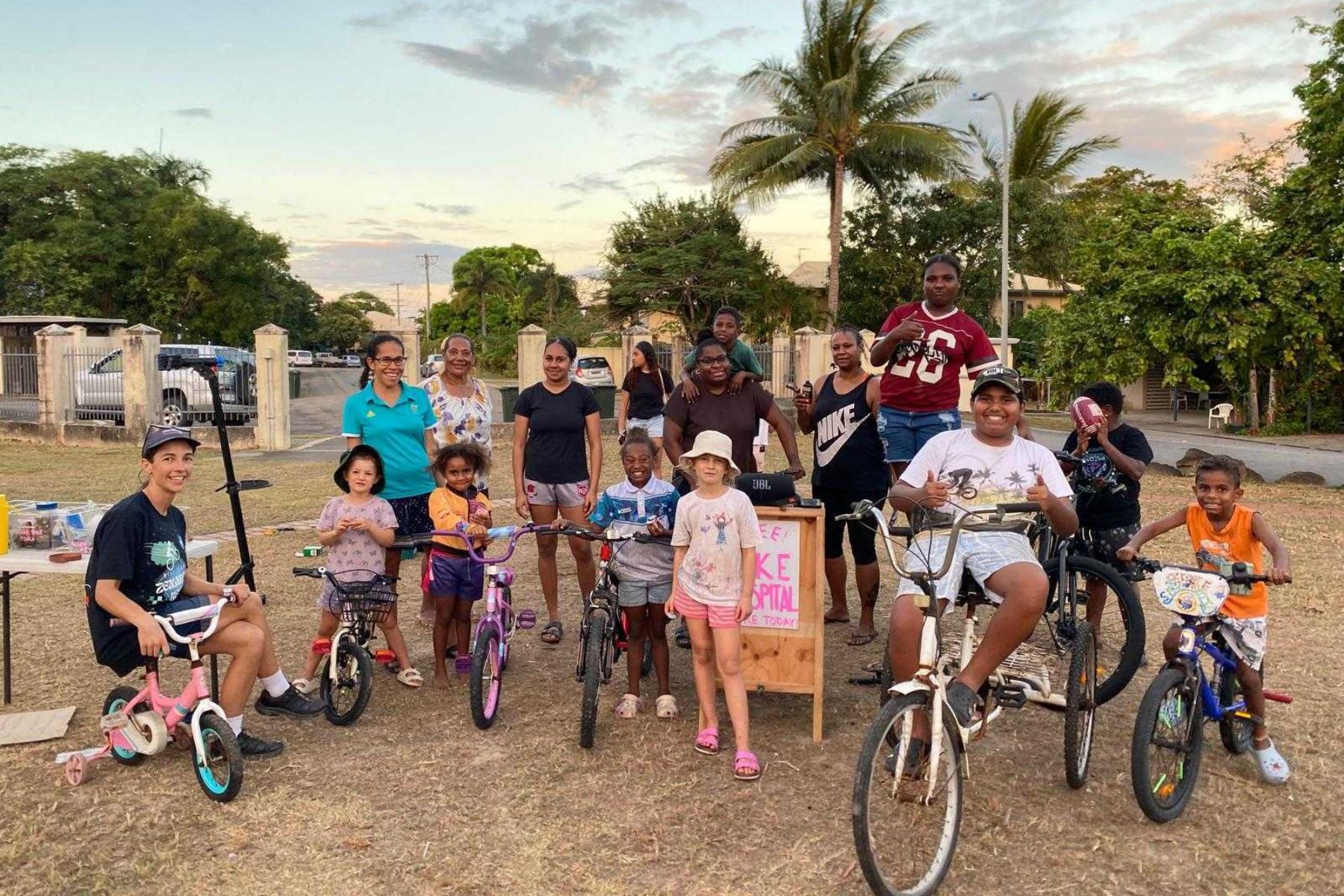
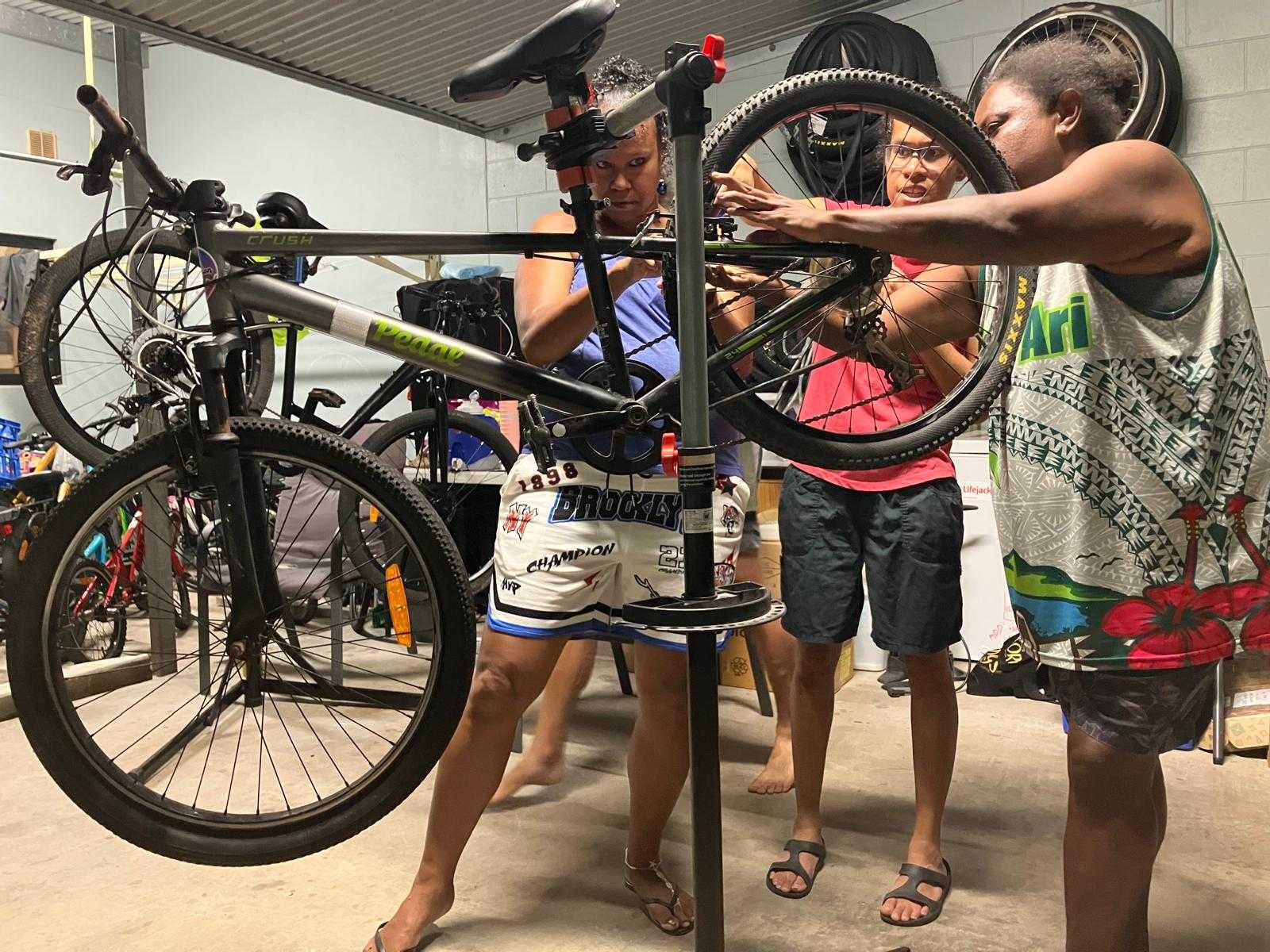
Her project, which is part of Rewiring Australia’s 100 + network of community organisations, initially started small. Once a month she ran a “bike hospital”, where locals brought in whatever bikes they had, shared tools and parts, and worked out repairs together. It got old bikes back on the road, but most people didn’t have a bike at all.
She soon found out why. Getting anything to the Torres Strait from mainland Australia is brutally expensive.
Order a $500 bike online and shipping can add another $700. So Sarah pieced together philanthropic funding, grants and crowdfunding, and last June brought 100 bikes to the island. People applied, with priority given to First Nations community members, caregivers and anyone with transport challenges or relying on taxis. Some bikes were fully funded, others subsidised for a small contribution.
At the handover, plenty of the new owners told her they hadn’t ridden since they were on a tricycle. Then they got on and took off.
Sarah had been told teenagers wouldn’t ride, so she allocated most bikes to adults and families. Now teenagers are some of the keenest riders, a few with a baby seat on the back and a younger sibling in it.
With fuel on the island at $3.55 a litre, a dollar more than when she arrived, the case for riding is getting harder to ignore. And it’s spreading beyond Sarah. Five local women have been trained in repair, a local fitness instructor encourages people to ride to her sessions, and another local has generously offered a temporary location to host the shipping container bike workshop.
She deliberately chose regular bikes over e-bikes. They’re cheaper, easier to fix and hold up better in the salty air. A bike with a basket, a crate or a baby seat is a genuinely useful way to get around.
“At first I thought, until everyone’s riding, we shouldn’t be bringing more bikes,” she says. “But more bikes will actually speed up that transition and potentially enable a local bike economy to emerge. The more people doing it, the more normalised it is. It’s like what’s happening with EVs in Australia right now.”
Bikes 4 Life in Sydney has offered more secondhand bikes. Sarah is now working out how to fund the freight.
Before the Torres Strait, Sarah was a photographer who volunteered her skills for causes she cared about, from a refugee support group in the Illawarra to an Indigenous cultural burning workshop. Climate justice and First Nations justice have always been at the heart of it. The bike project grew from a simple question: what can one person do. It turns out for Sarah, quite a lot!
At COP31, Sarah will be based in the green zone, and she’s going in with an open mind. She wants to meet people who are genuinely committed to climate action, especially others in Australia working to cut transport emissions and reduce reliance on fossil fuels. She knows not everyone at a summit like this is there for the right reasons. “But I know there’ll be plenty of people who are,” she says. “I’m hoping to figure out who those people are.”
She also wants to take what she’s learnt on the island to a bigger audience. For Sarah, the Torres Strait isn’t a special case. It’s a clear picture of a problem the whole country shares.
She wants Australians to rethink how they make short local trips, and to see bike riding as something for everyone, not just racers and triathletes.