.png)
In a striking interview on ABC's Insiders this weekend, the Shadow Minister for Industry and Sovereign Capability laid out a compelling case for why Australia needs to reduce its dependence on imported fuel, build domestic energy resilience, and protect households from global price shocks. He spoke passionately about self-reliance. He worried aloud about families at the bowser.
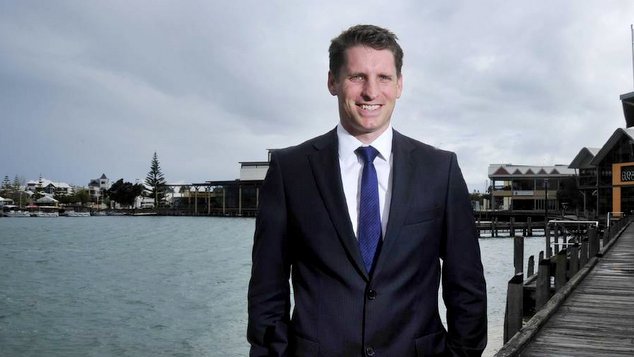
Andrew Hastie gets it. He just doesn't know he gets it yet.
In a striking interview on ABC's Insiders this weekend, the Shadow Minister for Industry and Sovereign Capability laid out a compelling case for why Australia needs to reduce its dependence on imported fuel, build domestic energy resilience, and protect households from global price shocks. He spoke passionately about self-reliance. He's worried aloud about families at the bowser, writes Rewiring Australia CEO Francis Vierboom. He warned of a "twin energy shock in oil and gas" that could tip Australia into recession.
And then, when asked whether electric vehicles might be part of the answer, he kept going: "I have no problem with electrification. It's a good thing. It diversifies our supply chain."
But having walked right up to the electric door, Hastie turned around and instead walked on to the set of the Mad Max movies to propose coal-to-liquid refineries instead.
Hastie wants Australia to be self-reliant. So does Australia. The difference is that electrification actually delivers it.
An Australian household with rooftop solar, a home battery, and an electric vehicle is functionally immune to an oil shock. They don't need fuel from the Strait of Hormuz. They generate their own energy from the sun that hits their own roof, they store it, and then drive on it. That's sovereign capability at the household level.
And Australians are voting with their feet, especially in Hastie's own backyard. His seat of Canning ranks in the top five electorates in Western Australia for battery installations under the Cheaper Home Batteries Program. Postcode 6112, covering Armadale, Harrisdale, Piara Waters and other suburbs at the heart of Canning, is one of the top ten postcodes in the entire country for battery uptake. These aren't inner-city progressives. They're outer-suburban families who looked at their bills and made a rational economic decision. Hastie himself acknowledged in the interview that EV sales have taken off since the war began.
Hastie's response? He wants to cut the subsidies that are helping them do it.
Instead of backing the technologies his own constituents are choosing, Hastie floated coal-to-liquid fuel as a path to energy sovereignty. When asked how expensive it would be, he conceded he couldn't give a figure. When asked about its emissions, he said there are "always trade-offs."
Let's be clear about those trade-offs. Coal-to-liquid is one of the most carbon-intensive fuel production methods on earth and it’s expensive. South Africa's Sasol plants have required decades of state support. And it would take years, probably a decade or more, to build at scale in Australia. It solves none of the immediate problems Hastie spent the rest of the interview worrying about.
An electric vehicle, by contrast, can be plugged in tonight. A home battery can be installed this month. Rooftop solar is already on more than four million Australian homes. The infrastructure exists, the supply chains are established and the economics already work.
Perhaps the most revealing moment in the interview was Hastie's proposal to fund fuel excise cuts by raiding the EV discount, the home battery scheme, and green hydrogen subsidies.
Cutting fuel excise when supply is constrained doesn't create more fuel. It increases demand for a commodity we're running short of, and prices will rise again to reduce demand, so it's likely to just hand over taxpayer money directly to oil company profits.
Meanwhile, every dollar spent on household electrification permanently reduces Australia's exposure to the next oil shock.
Here's the thing about Hastie's interview that gives me hope: he's asking the right questions. But he’s not connecting the last few dots yet.
Electrification is a self-reliance project. It's a cost-of-living project. It's a national security project. It's the most conservative energy policy available: empowering individual households and businesses to generate, store, and use their own energy rather than depending on global supply chains.
Andrew Hastie has walked up to the electric door. The handle's right there. The families of Canning are already on the other side.
He just needs to step through.
Electrifying our homes and cars is the recipe to cut emissions and save money for Australian homes. Let's build an abundant electric future for Australia.
“Electric technologies are scientifically proven to be cheaper and more efficient. A heat pump water heater or reverse cycle A/C uses around a quarter of the energy to heat the same water or air. Gas goons will never tell you this and say it’s about consumer choice. It’s imperative that nobody is fooled by their lies.”

Join this webinar organised by the Nature Conservation Council to hear from experts on how improving energy efficiency helps fight climate change and why a Healthy Homes Plan will support rental homes (which are 1/3 of homes in NSW) to be more affordable and liveable.
South Australian gas customers risk being left with millions of dollars in new connection costs after the Malinauskas Government quietly delayed a national rule taking effect today that would have made new gas connections pay their own way.