.png)
We’re lucky to have abundant solar generation through the middle of the day in Australia, and from July 1 2026, Australian energy retailers will be required to offer households a plan that includes three hours of free electricity per day during peak solar generation hours.

From July 1, Australian energy retailers will be required to offer households a plan that includes three hours of free electricity per day during peak solar generation hours. It will be at 11am–2pm in NSW and SE Queensland, and 12–3pm in South Australia. Victoria will join in on October 1st at 11-2pm as well.
It will be up to energy customers to decide if they want to switch to a Solar Sharer Offer electricity plan. It won’t be an automatic change. And it won’t be the best decision for everyone to switch to this plan. It’s likely only to lower bills for people who can find ways to shift their energy usage into the free window.
We’re lucky to have abundant solar generation through the middle of the day in Australia, and that’s now reflected in the very low ‘wholesale’ price of energy during the middle of the day. That means 'when' we use energy is becoming just as important as 'how much'. By offering free midday energy, we can achieve some critical outcomes:
It is one of the most significant retail energy reforms in recent years, and for households with energy usage they can shift, the savings can be substantial.
Three hours of free energy in the middle of the day is a bit like having solar panels, and it could benefit renters or unit dwellers who don’t have solar on their roofs - if they’ve got the ability to move their energy around, and, crucially, the necessary smart meter installed in their switchboard.
Here’s our guide to making the most of Solar Sharer - and some notes on the policy changes that could deliver these savings to even more Australians.
The offer is time-of-use based: electricity consumed during the designated free window costs nothing. Outside that window, the price of energy will be a bit higher than current standard tariffs to compensate.
Households don't need solar panels to participate - the free energy comes from excess solar being generated across the grid - but they do need a smart meter to access time-of-use pricing.
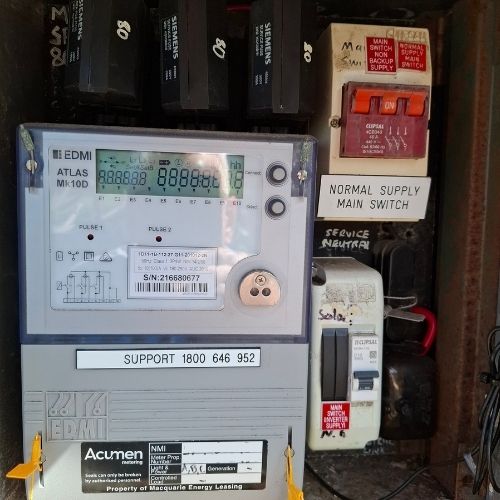
To access the offer, you need a smart meter. You can check whether you have one by looking at your meter box: old analogue meters have spinning dials, while smart meters have an LCD screen that sends data directly to your provider.
If you don't have a smart meter, contact your electricity retailer and request one - many will upgrade you for free. However, this is pretty inconsistent and there are some retailers who charge hundreds of dollars for this! We’re advocating for this to be simplified so retailers have to offer smart meter upgrades at no cost, but in the meantime, you can also shop around.
The upgrade process is generally straightforward - an electrician from a metering company will visit your house, and there might be a short power outage while the upgrade happens.
That’s it for about 80% of homes. But if a property's switchboard is too old, too small, or not compliant with current wiring standards, it has to be upgraded before a smart meter can be installed, at the cost of the the property owner. This is a tricky situation for renters especially, who don't own the asset and must negotiate the work through their landlord. Smart meters are an important piece of the energy system, and we think there’s a good case for the government to require landlords to pay for this upgrade as part of a minimum standard for rentals. The upgrade can cost anywhere from $1000 to $4000, so we also think it would be fair to offer owners the option of a flexible, deferred loan to cover this cost that’s repaid when the house sells - to make sure it’s easy for anyone to afford it.
The offer rewards households that can shift their biggest energy loads into the three-hour window. Automation matters: the households that will extract the most value are those that don't have to be home and actively managing their usage during that period.
In rough order of impact:
.jpg)
About 5.2 million Australian homes (47% of the population) have a resistive electric hot water system1. These systems are energy hungry, typically using about 6 kwh a day - but that also makes them a great candidate for saving money with Solar Sharer. To add a ‘timer’ that can optimise the heating schedule for the tank, an electrician can wire the system through the main meter (removing it from controlled load) and install a simple timer that costs around $100 to purchase with install costs around $250-500. If you have a big enough tank that can store enough for the rest of the day, then most of the heating is free, saving $500 a year compared to controlled load ($0.22/kWh) or $800 on a full flat rate tariff ($0.34/kWh). Essentially, the payback period for installing a hot water timer is just one year.
The more efficient and modern heat pump hot water systems, which only use about 1-2kwh per day, often have built-in timers and can be scheduled to run during the free window with no additional equipment - so it’s still a neat potential saving of up to $200 per year.
.jpg)
Electric vehicles will increasingly be the largest single energy load in Australian homes, and with 500,000 already in Australian garages, there are thousands who will be interested in using free electricity to power their driving as well. For households with an EV parked at home during the day, scheduling charging to the free window is straightforward: most EVs have built-in charge scheduling, or a simple timer plug can be used for trickle charging. The savings here are significant. Without a smart meter, an EV owner on a flat rate pays an average of around 34c/kWh to charge from the grid - roughly $1,798 per year. With access to the free window, that cost drops to zero for daytime charging. (It’s worth noting that beyond Solar Sharer, there are discounted EV-specific rates as low as 4c/kWh, and the annual cost drops to around $143.)
.jpg)
Households with home batteries (there’s about 500,000 of these now too) can charge them from the grid during the free window rather than drawing on their own solar generation, then use that stored energy - or export it - later in the day when grid prices are higher. These batteries are likely to be some of the biggest beneficiaries of Solar Sharer Offers on rainy days when the home’s own solar panels don’t fill it up, with up to 24kwh of charging permitted during three free hours that can cover a home’s entire usage needs for the rest of the day. There’s already over 12GWh of home battery storage capacity (June 2026 figures2) and growing quickly.
There’s something like 1.5 million Australian homes that have a pool. Pool pumps are often a big part of their energy bill (between 20 and 30%), and use anywhere from 6 to 10+ kwh per day. With a timer setup, they can run filtration systems and pool heating during the free window - helping the grid while slashing their costs.
Many washing machines and dishwashers have built-in delay timers. For air conditioning, WiFi controllers such as Sensibo (cost around $170) work with most existing systems that have a remote control, and allow scheduling via an app. It could save you between $50-$150 a year depending on how much you use your aircon outside of the three free hour offer.
The offer is available to all households, but households will benefit differently depending on their energy usage options. Rewiring Australia's Electrify 2515 program - a real-world household electrification pilot in Thirroul, NSW - is already providing a detailed picture of how different households are using the free period, and the divergence is stark.
These households are able to stack multiple options. Even on rainy days without solar energy, they can charge their battery from the grid for free, then use that energy through the rest of the daily period and avoid the high peak costs. Some retailers already offer four-hour free windows, and at least one offers unlimited free energy during that period - up to 24kWh per day in a standard three-hour window, or more on extended plans.
One in three Australians rent - more than three million households. For many, Solar Sharer is largely inaccessible.
Rewiring Australia estimates around 1.5 million rented households are still waiting for a smart meter upgrade, and a significant proportion of those will also require switchboard remediation before installation can proceed. Nationally, an estimated 10–20% of smart meter upgrades are indefinitely delayed due to remediation requirements - representing at least 400,000 to 800,000 of the roughly four million meter upgrades still outstanding across the National Electricity Market.
Even renters who do have smart meters face additional barriers. They typically cannot install timers on hot water systems, EV chargers, or other infrastructure without landlord approval. Many are reluctant to request upgrades for fear of cost pass-through or lease complications.
Check your retail plan closely. Some retailers may counter the Solar Sharer benefits by increasing their fixed 'Daily Supply' fees. For instance Origin Energy is increasing their Daily Supply fees to around $4/day which would could be $1500/year just on supply charges so the benefits may not outweigh the new fixed fees. Check your tariffs closely to ensure it's the best deal for your situation.
Solar Sharer’s stated aim is to extend the benefits of solar and flexible energy to renters and strata residents - the households historically least able to access them. Rewiring Australia has proposed four measures that could open this up for more Australians:
Switchboard remediation is the single biggest barrier to smart meter installation, and therefore to accessing the offer. Landlords should be required to fund necessary switchboard upgrades when a tenant requests access to Solar Sharer with deferred finance available to landlords who need it. Without this, the upgrade burden falls on renters who don't own the asset and have no guarantee of long-term tenancy.
Smart meters are a prerequisite for the offer, and while many retailers already provide them at no cost, this should be a universal requirement for any retailer offering Solar Sharer.. Government rebates should support retailers where needed to make this viable at scale.
Hot water is the biggest load-shifting opportunity for most households but only if the system can be automated. The Federal Government could use the Small-scale Renewable Energy Scheme (SRES) to accelerate the rollout of smart controls for existing electric hot water systems. This would allow households to time their hot water heating to the free window without needing to replace the system entirely, saving hundreds of dollars a year.
Many renters could access meaningful savings through balcony solar panels or portable batteries but product standards for these devices don't yet exist, creating legal and practical barriers. As is the case of the newly introduced vehicle to grid technology, establishing clear product standards would give renters and apartment-dwellers a pathway to participate in the energy transition without requiring landlord approval for permanent and more costly installations.
References
Electrifying our homes and cars is the recipe to cut emissions and save money for Australian homes. Let's build an abundant electric future for Australia.

“Electric technologies are scientifically proven to be cheaper and more efficient. A heat pump water heater or reverse cycle A/C uses around a quarter of the energy to heat the same water or air. Gas goons will never tell you this and say it’s about consumer choice. It’s imperative that nobody is fooled by their lies.”

Join this webinar organised by the Nature Conservation Council to hear from experts on how improving energy efficiency helps fight climate change and why a Healthy Homes Plan will support rental homes (which are 1/3 of homes in NSW) to be more affordable and liveable.
South Australian gas customers risk being left with millions of dollars in new connection costs after the Malinauskas Government quietly delayed a national rule taking effect today that would have made new gas connections pay their own way.